Living in Durham California: A Real Look at Daily Life
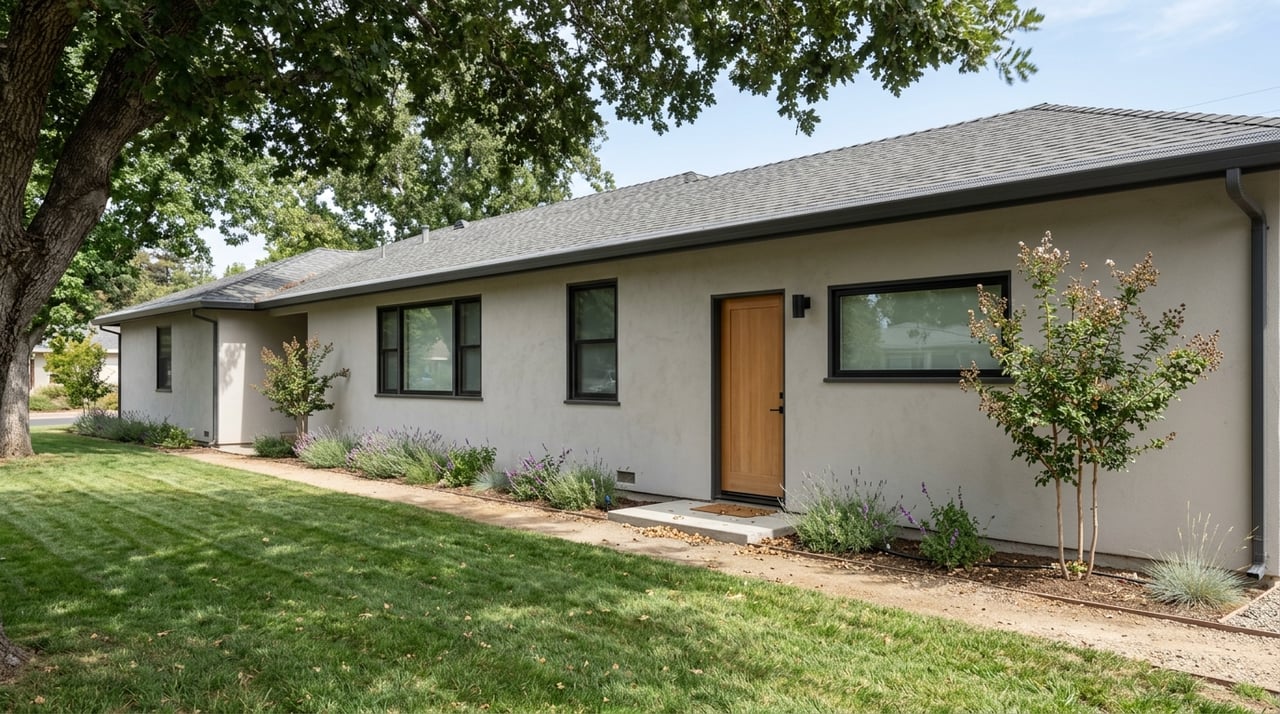
Wondering whether Durham feels like a quiet country town, a Chico commuter spot, or something in between? If you are thinking about moving to this part of Butte County, that is the right question to ask. Durham offers a rural setting, a slower pace, and a strong connection to agriculture, while still keeping everyday life within reach of Chico. This guide will help you get a realistic picture of what living in Durham, California is actually like so you can decide whether it fits the way you want to live. Let’s dive in.
Durham is an unincorporated community in Butte County with 5,834 residents spread across 81.69 square miles. That works out to a population density of about 71.4 people per square mile, which is much lower than what you would expect in a more built-up city setting.
In daily life, that usually translates to more open land, more space between properties, and a quieter atmosphere. Butte County planning materials describe Durham as a rural, agriculture-dominated area on the valley floor south of Chico, with orchards and farming activity common around nearby homes.
A lot of buyers ask whether Durham is basically just a suburb of Chico. The short answer is no, not in the typical tract-home, city-edge sense.
Durham is its own rural community, but it is closely tied to Chico. Its location south of Chico, along with a reported mean commute time of 18.1 minutes, suggests many residents likely rely on Chico for work, larger shopping trips, dining, and additional services.
That balance is a big part of Durham’s appeal. You can live in a quieter setting without feeling completely disconnected from the amenities of a larger nearby city.
Durham has a high owner-occupancy rate, with 70.9% of housing units owner-occupied. That is notably higher than the statewide figure of 55.9%, and it helps support the sense that Durham is a more stable, less transient place.
That impression also shows up in mobility data. About 81.1% of residents were living in the same house one year earlier, which points to a community where many people stay put rather than move frequently.
For buyers, that can mean a market where homes are often held longer and neighborhoods may feel more established. Average household size is 2.5 people, and the housing mix is largely centered on single-family homes.
If you are picturing dense subdivisions throughout Durham, that is not the overall pattern. County planning and hazard-mitigation materials show that Durham’s housing and land-use patterns are shaped in part by the lack of a public sanitary sewer system in the area.
That matters because it limits smaller parcels and multiple dwellings in many parts of the community. Outside the community core, land is mostly agricultural and generally uses minimum parcel sizes of 20 to 40 acres.
Inside the core, the picture is more mixed. You will find single-family residential uses along with commercial, industrial, and public uses, so Durham is rural, but not one-note.
In Durham, agriculture is not just nearby. It is part of the area’s identity. Butte County reports strong agricultural production countywide, led by walnuts, almonds, and rice, with prunes also remaining a significant crop.
County environmental materials specifically note that Durham is dominated by agriculture and that nut and fruit orchards are major crops in the area. If you live here, that can shape what you see out your windows, the kinds of roads you travel, and the overall rhythm of the community.
For some buyers, that rural agricultural setting is the whole point. For others, it is important to understand up front that Durham does not offer the same feel as a conventional suburban neighborhood.
One of the biggest surprises for some buyers is that Durham does have local amenities, just on a smaller scale. You are not moving to a place packed with big commercial centers, but you do have a practical set of community services close to home.
Butte County operates a Durham Branch library on Durham-Dayton Highway. Durham Recreation & Park District also provides five community parks, Veteran’s Memorial Hall, a swim center, and an activity center.
These features help reinforce Durham’s small-town identity. The amenities are community-focused and local rather than large or highly urban.
Durham Unified School District serves the community through Durham Elementary, Durham Intermediate, and Durham High School. The district also publishes enrollment information for both in-district and inter-district families.
For many buyers, that points to a compact local-school setup rather than a long list of campuses spread across a larger city. If having a local school system nearby matters to you, Durham’s structure may feel straightforward and easy to understand.
As always, if schools are an important part of your move, it is smart to confirm enrollment details directly with the district as you narrow down your home search.
Durham has a noticeably older age profile than California as a whole. About 27.4% of residents are age 65 or older, compared with 16.5% statewide, while 18.1% of residents are under 18.
That mix suggests Durham includes both households with children and older residents, but overall leans older than the state average. For buyers, that can be useful context when trying to picture the pace and makeup of the community.
Rather than fitting one life stage only, Durham appears to attract people looking for a quieter home base. That may include retirees, longtime residents, and buyers who simply want more space and a slower day-to-day setting.
Living in Durham does not mean giving up access to outdoor recreation. One of the big regional draws nearby is Bidwell Park in Chico, which the City of Chico describes as one of the largest municipal parks in the nation.
Bidwell Park includes hiking, mountain biking, swimming holes, disc golf, horseback riding, and other outdoor uses. For Durham residents, that means you can enjoy a rural home environment while staying close to a major outdoor amenity.
That combination can be especially appealing if you want open space at home and easy access to recreation on the weekends. You do not have to live in Chico proper to take advantage of what the area offers.
Durham tends to make the most sense for buyers who want a quieter setting and are comfortable with a rural or semi-rural lifestyle. The available data and planning materials support the idea that it is a good fit for people looking for more space, a more settled housing environment, and a practical connection to Chico.
It may be especially appealing if you are looking for:
Durham may be less ideal if you want highly walkable commercial districts, lots of newer high-density housing options, or the convenience of city services right outside your door.
At its core, Durham feels grounded, spacious, and local. It is a place where agriculture still shapes the landscape, where housing tends to be more owner-occupied and stable, and where daily life often balances quiet home surroundings with practical access to Chico.
That does not make Durham better than city living or worse than it. It simply makes it different, and for the right buyer, that difference is exactly the draw.
If you are exploring Durham or other nearby Butte County communities, working with a local team can make it much easier to compare property types, land-use patterns, and neighborhood feel. To start the conversation, connect with Upside Real Estate (CA).
Stay up to date on the latest real estate trends.


You’ve got questions and we can’t wait to answer them.