Paradise Rebuild And New Homes: A Buyer’s Field Guide
Buying in Paradise is not just about finding a floor plan you like. It is also about understanding how the lot, septic system, permit history, and wildfire-hardening details all work together. If you are considering a rebuild or newer home here, this guide will help you ask better questions, spot key differences between properties, and feel more confident before you write an offer. Let’s dive in.
Paradise is still rebuilding at scale, and that matters for buyers. According to the town’s weekly rebuilding reports, as of March 24, 2026, the town had received 3,811 single-family applications, issued 3,576 permits, and granted 3,123 certificates of occupancy. The same report shows 1,022 multi-family unit applications, 896 permits issued, and 755 certificates of occupancy.
That volume means you are shopping in a market where many homes are newer, but not always identical in how they were planned, built, or finalized. The town has also stated that the post-Camp Fire rebuild has involved newer materials, more complex foundation systems, and expanded wildfire-resilience requirements. In early 2026, Paradise approved a corrective action plan for its Building Division after an audit found gaps in training, oversight, documentation, and inspection consistency.
For you as a buyer, the takeaway is simple: a newer home in Paradise can offer clear benefits, but it also deserves careful review. You want to confirm not just what was built, but how the site was approved and whether the home has complete final sign-offs.
Not all newer homes in Paradise are the same type of construction. The town’s rebuilding data shows that of the single-family rebuilds, 2,817 are stick-built and 994 are manufactured. That means about 73.9% of single-family rebuilds are stick-built.
This matters because construction type can shape everything from design flexibility to financing questions to long-term maintenance expectations. If you are comparing properties, it helps to know whether you are looking at a stick-built rebuild, a manufactured home, or a property with future ADU potential.
It is also a reminder that “newer” should not be your only filter. In Paradise, a smart comparison looks at the full package: the home, the parcel, and the infrastructure serving it.
A larger lot can sound appealing, but in Paradise, lot size alone does not tell you what you can actually do with the property. The town’s recovery zoning legend includes residential districts such as TR 1/3, TR 1/2, and TR 1, which reflect minimums of one-third acre, one-half acre, and one acre. At the same time, zoning information from the town makes clear that setbacks can vary by zoning district and by any recorded parcel or subdivision map.
That means the real question is the buildable envelope. Two parcels with similar acreage may not offer the same usable layout for a main home, garage, shop, or ADU.
Paradise’s housing documents also show a broad range of residential densities, from one unit or less per acre in Agricultural Residential areas to 15 units per acre in Multi-Family areas. So before you get attached to a property, it is worth confirming what the parcel can realistically support today.
One of the biggest differences between Paradise and many other markets is wastewater service. Paradise says it is the largest unsewered city in California, and for now, almost every parcel relies on onsite sewage disposal. You can review that process and related requirements through the town’s septic information page.
For buyers, this is a major planning issue because septic capacity can affect what size home the parcel can support. The town’s septic-related guide lists gross floor area limits of 1,500 square feet for one bedroom, 2,200 square feet for two bedrooms, and 2,900 square feet for three bedrooms, while four-bedroom homes are listed as unlimited subject to zoning limits.
That means your target home size may depend on more than price and lot dimensions. If you want extra bedrooms, an office, or room to expand later, you need to make sure the parcel and septic setup support that plan.
If you are thinking long term, an accessory dwelling unit may be part of the appeal. Paradise’s ADU guidebook says detached ADUs are generally capped at 850 square feet for one bedroom or 1,000 square feet for two bedrooms. The guidebook also notes that lot coverage can range from 20% to 35% depending on zoning, and the town offers pre-approved ADU plans.
For some buyers, that creates useful options. An ADU might support multigenerational living, guest space, or a more flexible property layout over time.
Still, this comes back to site planning. A parcel may be large on paper but still limited by setbacks, lot coverage rules, or septic realities, so it is important to verify feasibility before counting on future expansion.
In Paradise, wildfire resilience is not a side note. It is a core part of evaluating any rebuild or new home. In 2022, the town announced that all new homes built there would be required to adhere to Wildfire Prepared Home standards, and its current Wildfire Prepared Home information explains the broader framework.
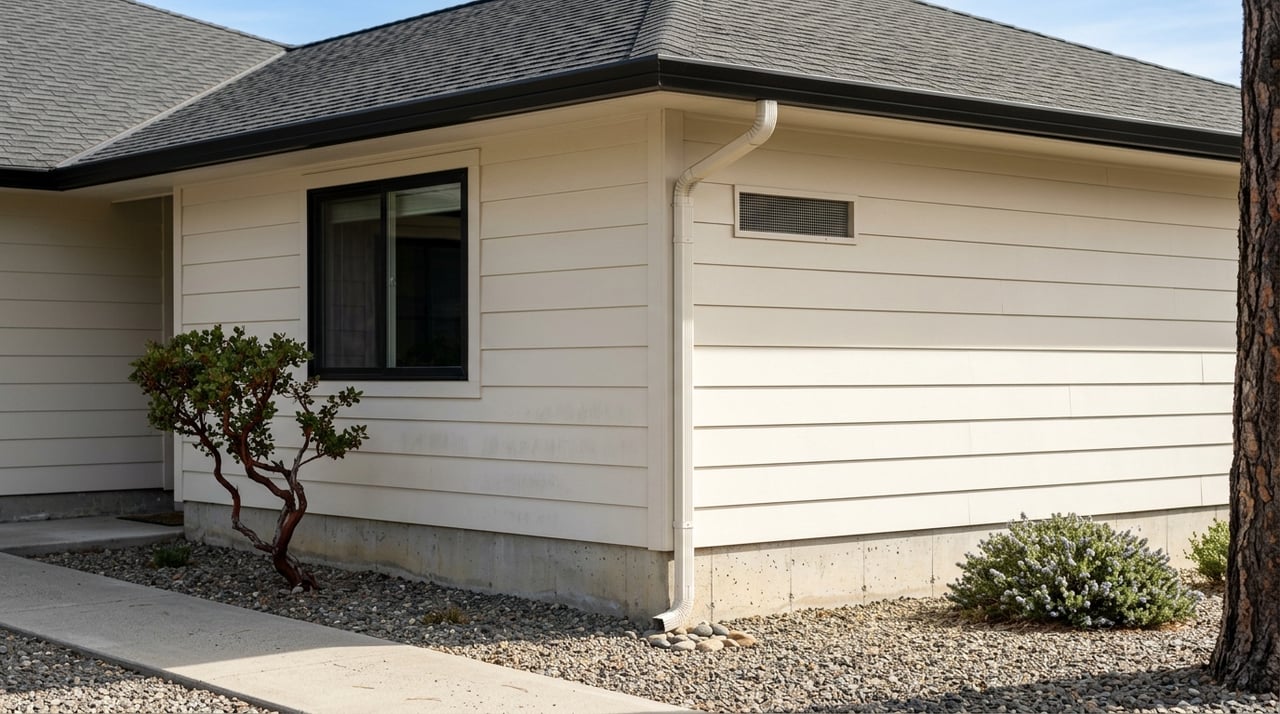
The buyer-friendly place to start is the town’s WUI checklist. It calls for features such as noncombustible gutters with debris-control measures, ember-resistant or State Fire Marshal-listed vents, ignition-resistant or noncombustible exterior wall systems, protected eave and roof-valley details, and underfloor or appendage protection where needed.
The town also highlights the Home Ignition Zone, which means the first 5 feet around the home should remain noncombustible and free of stored combustibles or vegetation. So when you tour a property, look beyond curb appeal. Ask whether the exterior package and surrounding area are being maintained in a way that matches current wildfire-hardening expectations.
Even a well-built home needs ongoing parcel maintenance. Paradise’s vegetation-management guide says parcels 1.5 acres and smaller must maintain the entire parcel as a fuel break.
That is an important practical point for buyers. Fire resilience is not just about materials on the house. It is also about how the lot is maintained after closing.
If you are comparing properties, think about the maintenance commitment that comes with the parcel. A beautiful lot with more trees, slope, or open space may also require more consistent vegetation management.
Many buyers ask whether sewer service is coming soon. Paradise is pursuing a sewer project, but the timeline is still long range. The town’s septic and sewer project information says preliminary design of the wastewater treatment facility and initial collection system began in February 2026, a draft Subsequent EIR is expected in 2026, permitting and right-of-way work in 2027, Phase 1 construction is projected for 2028 to 2029, and service is expected to begin in 2030.
That suggests most buyers should plan around septic, at least for the near future. If future sewer access is important to your purchase decision, you will want to confirm whether a parcel falls within the current service area assumptions rather than assuming a conversion is right around the corner.
In other words, buy the property for how it functions now, not only for what may happen later.
When you are buying a rebuild or newer home in Paradise, these are some of the most important items to verify:
This is one of those markets where small details can have a big impact. A property that looks similar online may perform very differently once you dig into site constraints and approvals.
The most helpful way to think about a Paradise purchase is this: you are not only buying a house. You are buying a site-specific resilience project that includes the parcel, the systems, and the paperwork behind it.
That may sound like extra work, but it can also be a real advantage. Buyers who understand the local process are usually in a better position to identify strong opportunities, avoid surprises, and make decisions with more confidence.
If you want a local guide who can help you evaluate Paradise rebuilds, newer construction, land, and foothill properties with a practical eye, connect with Upside Real Estate (CA). We bring local knowledge, straightforward advice, and hands-on support so you can move forward with clarity.
Stay up to date on the latest real estate trends.

You’ve got questions and we can’t wait to answer them.